Nelson Ghost Town History: The Real Story Behind Eldorado Canyon
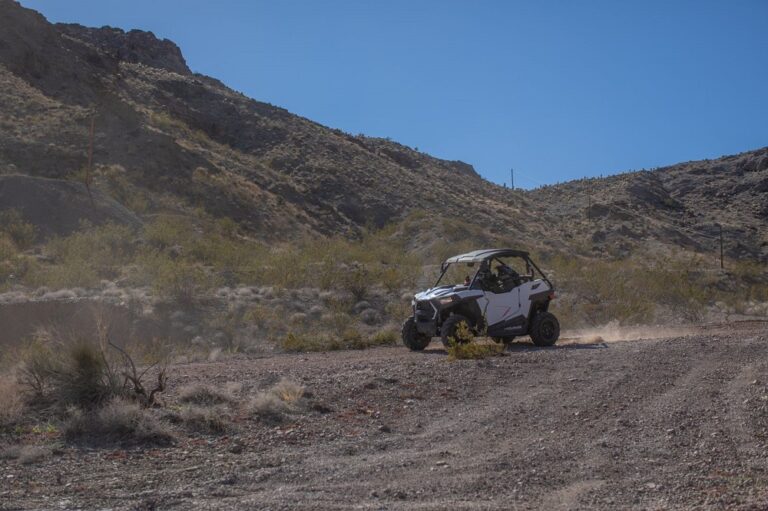
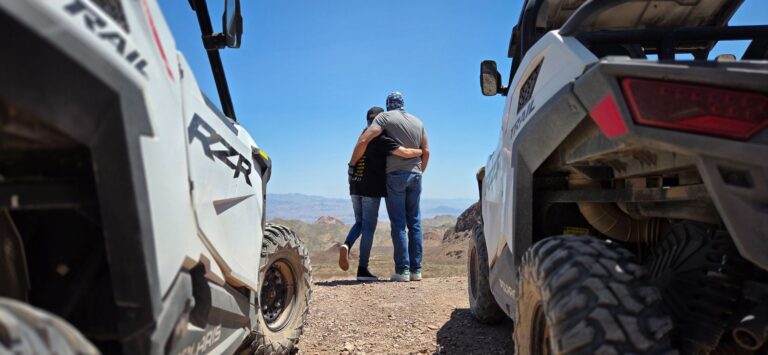
Nelson Ghost Town is one of the oldest and most storied places in Southern Nevada, and it sits just about 45 minutes south of the Las Vegas Strip. Long before the neon and the casinos, this narrow slice of the Eldorado Mountains was a gold rush boomtown so lawless that the nearest sheriff would not bother making the trip. Today it is a preserved piece of Old West history, and the private trails that wind through the surrounding canyon are where Awesome Adventures runs its guided ATV and RZR tours.
Ready to ride? See our Las Vegas ATV tours in Eldorado Canyon.
Here is the real story of how Nelson came to be, why it earned its bloody reputation, and what you can still see when you visit.
Where is Nelson Ghost Town?
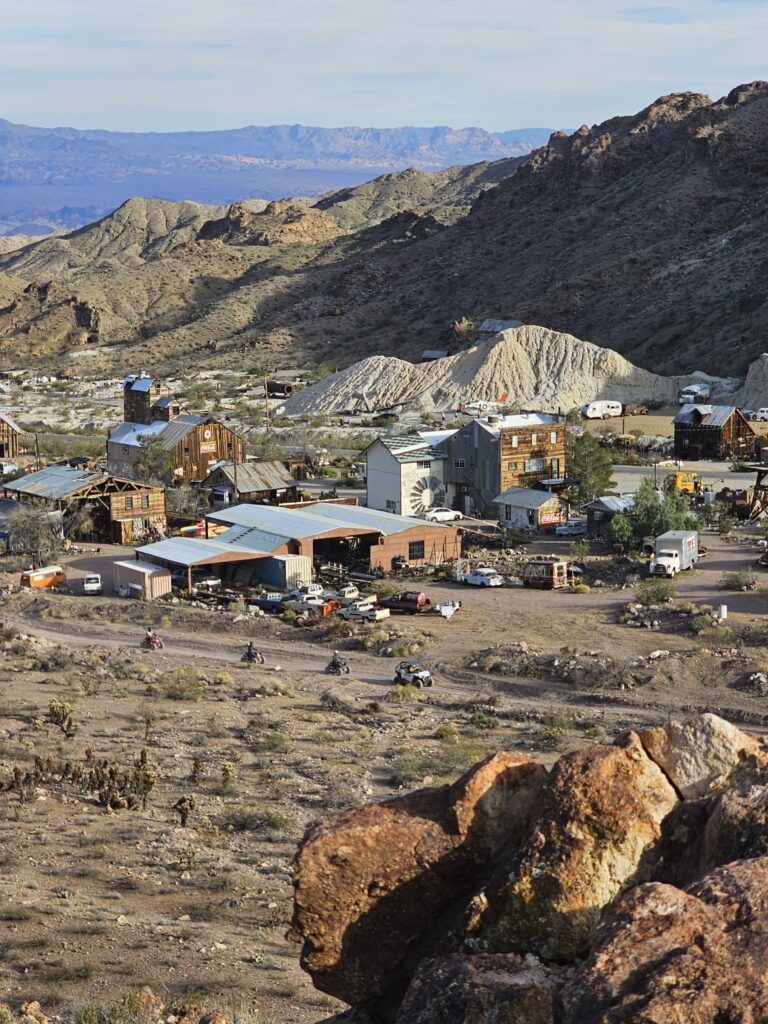
Nelson is a tiny community in Eldorado Canyon, in the Eldorado Mountains of Clark County, Nevada. It sits along Nevada State Route 165, southeast of the junction with U.S. Route 95, roughly 45 minutes south of the Las Vegas Strip. As of the 2020 census, the population was just 22 people. For a place this small, its history carries an outsized weight in the story of the American West.
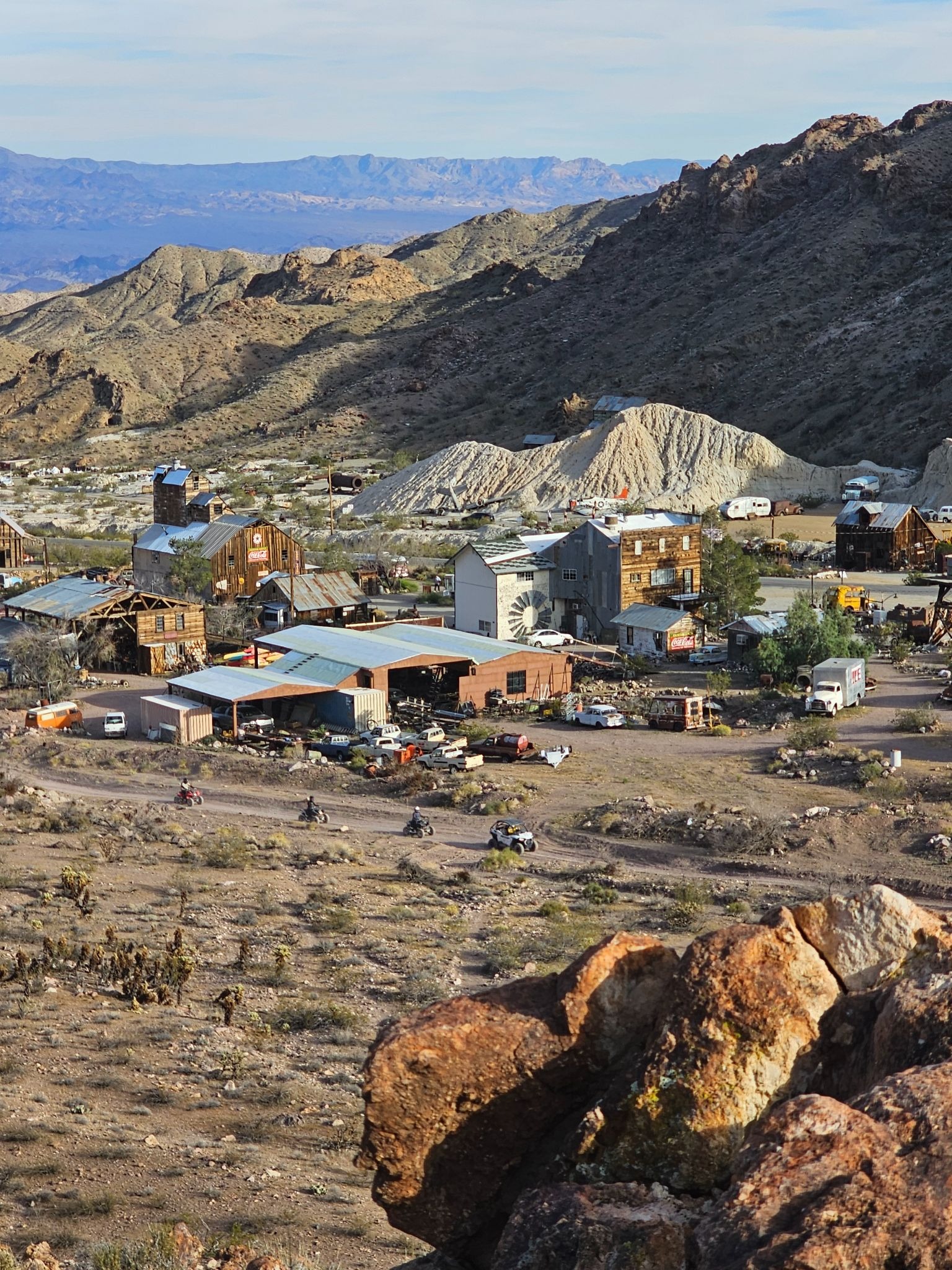
The canyon itself runs down toward the Colorado River, and that geography shaped everything that happened here, from the steamboats that once supplied the mines to the flash floods that eventually reshaped the land. The setting is dramatic in a way photos struggle to capture, with steep desert walls, weathered wood, and rusted metal against an enormous sky.
How did Eldorado Canyon get its name?
The name goes back to 1775, when Spanish explorers moved through the region and named it Eldorado, a nod to the legendary city of gold. The Spanish were hunting for precious metals, but they turned up mostly silver, deemed the area unproductive, and moved on. Native peoples had been in the canyon for far longer, with Paiute and Mojave tribes inhabiting the area, and evidence that Native Americans mined turquoise from the canyon walls long before any European arrived.
The gold the Spanish missed did not stay hidden forever.
When did the gold rush start in Nelson, Nevada?
In 1858, U.S. soldiers from Fort Mojave found placer gold, the loose gold that collects in riverbeds and washes. That discovery set off a chain of events. In 1861, the Mojave Chief Irataba directed a prospector named John Moss to a silver and gold vein in the canyon, and the Techatticup Mine was born. It became the oldest, richest, and most famous gold mine in Southern Nevada.
The name Techatticup comes from two Paiute words meaning roughly “hungry” and “bread,” a reference to Paiutes in the area who came to the mining camps looking for food. Over the following decades the mine and its neighbors pulled several million dollars in gold, silver, copper, and lead out of the ground, with estimates commonly placing the total value around $10 million during the boom years. Supplies came upriver by flat-bottomed steamboat, and claims with names like Honest Miner, Morning Star, and Savage were registered across the district.
Why was Nelson so dangerous?
Isolation is the short answer. The nearest sheriff was stationed roughly 200 miles away in Pioche or Hiko, which meant law enforcement almost never came to the canyon. Many of the men who worked the mines were Civil War deserters looking to disappear, and disputes over mine ownership, management, and labor routinely turned deadly. Killings were so frequent that they barely counted as news.
Two figures loom especially large in the canyon’s violent history. Ahvote, a Paiute renegade, is credited with five murders. Queho, often described as one of Nevada’s most notorious outlaws, is believed to have killed more than 20 people. According to a plaque near the Techatticup Mine, Queho killed his last victim, Maude Douglas, in 1919, then successfully eluded the posses that came looking for him.
The town of Eldorado was eventually renamed Nelson after Charles Nelson, a camp leader who was murdered in 1897. Even the town’s name is a monument to the violence that defined it. To protect the steamboat traffic on the river, the U.S. Army established Camp El Dorado at the mouth of the canyon in 1867, though the post lasted only about two years.
What happened to Nelson’s Landing?
At the mouth of the canyon, where Eldorado Canyon meets the Colorado River, sat Nelson’s Landing. During the steamboat era it was one of the more important ports on the river, and during Prohibition it became a conduit for illegal liquor moving between states. After the completion of Hoover Dam, the landing became a popular spot for fishing and tourism.
That chapter ended abruptly. On September 14, 1974, a powerful storm in the surrounding mountains sent a wall of water down the canyon’s converging washes and produced a catastrophic flash flood. The wharf area at Nelson’s Landing was destroyed and nine people were killed. It remains a sobering reminder that this beautiful desert canyon can turn dangerous in minutes, which is one reason a guided experience matters here.
When did the mines close?
The mines in the canyon were active from roughly 1858 until 1945. The 1930s brought a resurgence in gold production, and by the early 1940s the district’s mills were processing hundreds of tons of ore per day. But rising labor costs after World War II led to layoffs and the eventual closure of the operations. As the gold gave out, residents drifted away in search of richer claims elsewhere, and Nelson slid into the quiet, weathered state that earned it the ghost town name.
For decades the buildings simply sat and aged in the harsh desert climate. Then, in 1994, Tony and Bobbie Werly purchased around 50 acres that included several mining claims, a store, a stamp mill, a bunkhouse, and a handful of tin miner cabins. They spent years restoring the site and eventually opened the Techatticup Mine for tours, turning a decaying camp into one of the region’s most authentic historical attractions. You can read more about the site’s history through Travel Nevada and the Nelson, Nevada Wikipedia entry.
Why is Nelson Ghost Town famous in movies?
The same weathered buildings, rusted vehicles, and dramatic canyon backdrop that draw history buffs also draw Hollywood. Nelson has served as a filming location for decades. The most recognizable prop on the property is the small plane that appears nose-down in the dirt, a fabricated wreck built for the 2001 crime film 3000 Miles to Graceland, starring Kevin Costner and Kurt Russell. The 1997 thriller Breakdown also filmed here, and the grounds have hosted countless music videos, commercials, and photo shoots over the years. Even the video game Fallout: New Vegas drew on this stretch of desert.
The look is unmistakable, a place people often describe as Mad Max meets the Old West, which is exactly why film crews keep coming back.
What can you see at Nelson Ghost Town today?
The grounds are packed with authentic mining artifacts and Hollywood leftovers. Expect old equipment, ore carts, antique cars and trucks, gas pumps, weathered buildings, and the famous crashed plane prop, all set against the canyon walls. Inside the small museum and gift shop you will find mining specimens and desert curiosities. It is a photographer’s dream, and it feels less like a museum and more like walking onto a live movie set.
The real depth, though, comes from going into the canyon itself and inside the mine, where the history is told firsthand by guides who know it well.
Can you visit Nelson Ghost Town?
Yes. The ghost town and the Techatticup Mine property are open to visitors, and the surrounding Eldorado Canyon is one of the most rewarding day trips from Las Vegas. The best way to experience the canyon is on a guided off-road tour, where the history comes alive alongside the scenery.
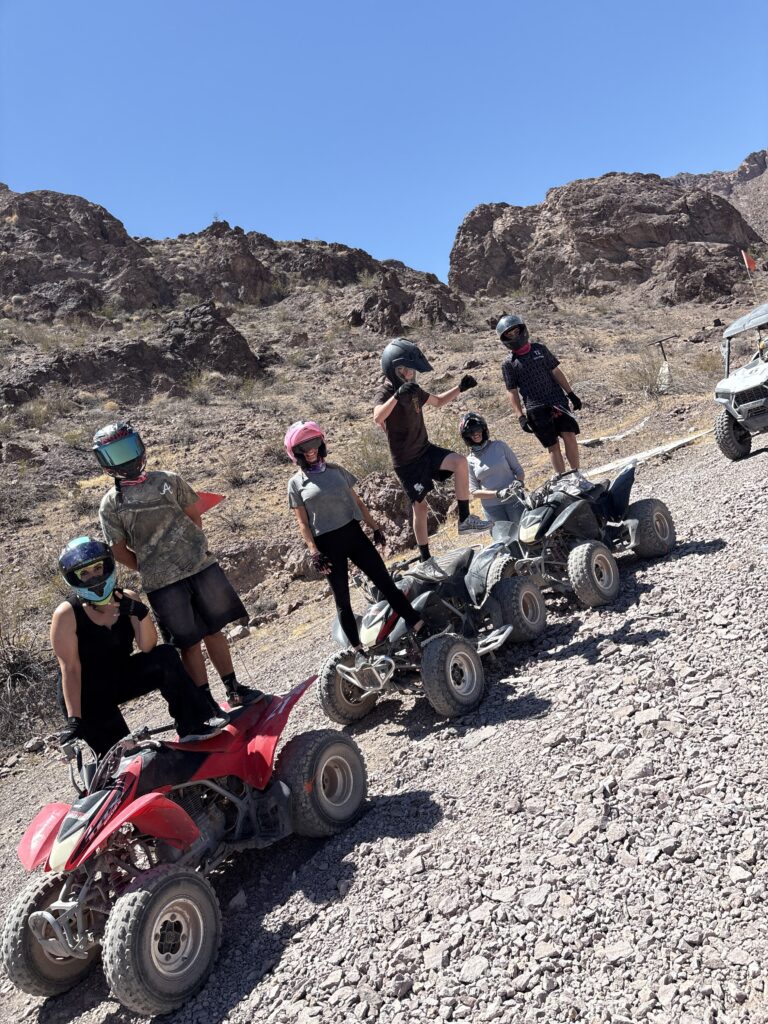
Awesome Adventures runs guided ATV and RZR tours on private desert trails near Nelson, with the 1861 Ghost Town and the famous Techatticup Gold Mine property as stops along the way. On select tours, guests go inside the mine itself, where the guides share stories about how the miners lived and what they endured, history you will not find anywhere else. No riding experience is needed, all safety gear is included, and every tour comes with a free photo and video package so you leave with more than just memories. If you want to explore the destination itself before you ride, our Nelson Ghost Town and Eldorado Canyon pages go deeper on what to expect.
When is the best time to visit Nelson Ghost Town?
Spring and fall bring the most comfortable temperatures for exploring the canyon, with mild days that are ideal for being outdoors. Summer visits are best in the morning, before the desert heat peaks, which is one reason morning tours are popular. Winter can bring crisp, clear days that are perfect for photography. Whenever you come, bring water, wear closed shoes suitable for desert terrain, and plan for sun protection.
If you want to walk the same ground where prospectors struck it rich, outlaws vanished into the desert, and Hollywood built a plane crash that has outlasted the movie, Nelson Ghost Town is waiting about 45 minutes from the Strip.
Ready to see it for yourself? Explore our Eldorado Canyon and Nelson Ghost Town tours or call 702-257-8509 to book.
#LasVegasATVTour #NelsonGhostTown #EldoradoCanyon #ThingsToDoInLasVegas #TechatticupGoldMine