Eldorado Canyon History: Gold, Outlaws, and the Nevada Frontier
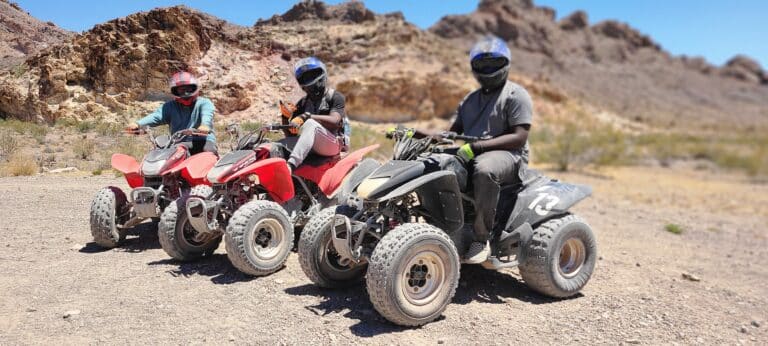
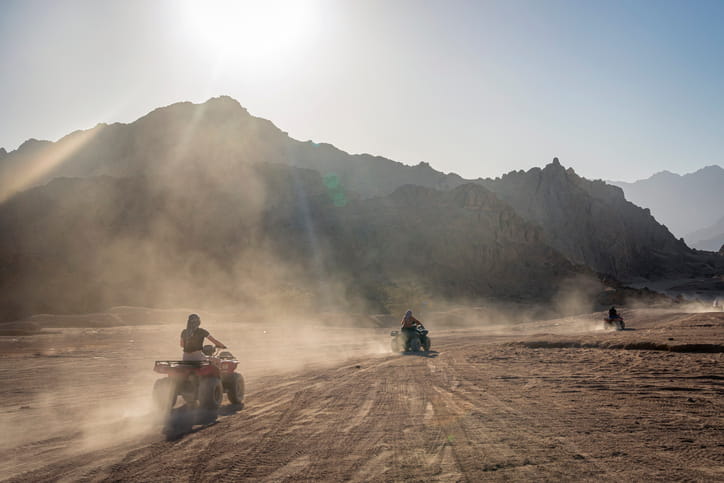
Eldorado Canyon is one of the most historically rich corners of Southern Nevada, and most Las Vegas visitors have no idea it exists just about 45 minutes south of the Strip. This narrow canyon in the Eldorado Mountains was the site of one of the earliest and biggest gold strikes in Nevada history, a place so remote and so lawless that it built a reputation rivaling Tombstone. Today the canyon is quiet desert country laced with private trails, and it is where Awesome Adventures runs its guided ATV and RZR tours.
Ready to ride? See our Las Vegas ATV tours in Eldorado Canyon.
To understand why Eldorado Canyon feels like stepping into another century, you have to go back a few hundred years.
Where is Eldorado Canyon?
Eldorado Canyon cuts through the Eldorado Mountains of Clark County, Nevada, running southeast toward the Colorado River. The small community of Nelson sits within it along Nevada State Route 165. From the Las Vegas Strip, the canyon is roughly a 45-minute drive south by way of U.S. Route 95. That short drive covers a lot of history, trading the neon of the city for a landscape that has barely changed in a century.
Who discovered Eldorado Canyon?
Native peoples were the first to use the canyon’s resources, with Paiute and Mojave tribes inhabiting the region and Native Americans mining turquoise from the canyon walls long before Europeans arrived. In 1775, Spanish explorers passed through and named the area Eldorado, after the mythical city of gold. They mined for a time but found mostly silver, decided the area was unproductive, and left.
They had no idea how much they were leaving behind.
When did the Eldorado Canyon gold rush begin?
The turning point came in 1858, when U.S. soldiers from Fort Mojave discovered placer gold in the canyon. Word spread, and prospectors followed. In 1861, the Mojave Chief Irataba led a man named John Moss to a promising vein, and the Techatticup Mine opened. That mine would become the oldest, richest, and most famous gold mine in Southern Nevada.
The arrival of steamboats on the Colorado River in 1858 had already begun sparking a mining frenzy as rumors of precious metals spread. Supplies came upriver by flat-bottomed boat, the population of miners grew, and claims with names like Honest Miner, Morning Star, Savage, and Techatticup were registered across the district. During its peak, the canyon and its mines produced several million dollars in gold, silver, copper, and lead, with the total often estimated near $10 million.
Why was Eldorado Canyon so lawless?
The canyon earned its violent reputation the hard way. It was hundreds of miles from the nearest sheriff, stationed in Pioche or Hiko, so law enforcement rarely appeared. That isolation attracted a rough crowd, including many Civil War deserters seeking anonymity. Disputes over mine ownership, management, and labor frequently ended in gunfire, and murders were so routine they barely warranted mention.
To protect the steamboat traffic on the Colorado River and deter raids, the U.S. Army established Camp El Dorado at the mouth of the canyon in 1867. It lasted only about two years before being abandoned. Even the military presence could not tame the place for long.
The canyon was also home to two of Nevada’s most infamous renegades. Ahvote is said to have killed five people, and Queho is believed to have killed more than 20. Near the Techatticup Mine, Queho killed his final victim, Maude Douglas, in 1919, then vanished into the desert and eluded the posses sent after him. You can read more about this turbulent history through Intermountain Histories and Travel Nevada.
What was Nelson’s Landing?
At the downstream end of the canyon, where Eldorado Canyon met the Colorado River, sat Nelson’s Landing. In the steamboat era it grew into one of the more important ports on the river. During Prohibition it became a route for smuggling liquor, and after Hoover Dam was completed it drew fishermen and tourists to the reservoir waters of Lake Mohave.
That history came to a violent end on September 14, 1974. A heavy storm in the mountains sent runoff pouring down the canyon’s five converging washes and produced a devastating flash flood. The wharf area was destroyed and nine people lost their lives. The flood is a permanent reminder that Eldorado Canyon, for all its beauty, demands respect, which is part of why exploring it with experienced guides is the smart way to go.
What happened to the mines?
Mining continued in the canyon from roughly 1858 until 1945. The 1930s saw a resurgence in gold production, and by the early 1940s cyanide mills were processing hundreds of tons of ore per day. But rising labor costs after World War II ended the boom, and the mines closed. As the gold played out, people left, and the canyon settled into the weathered quiet it is known for today.
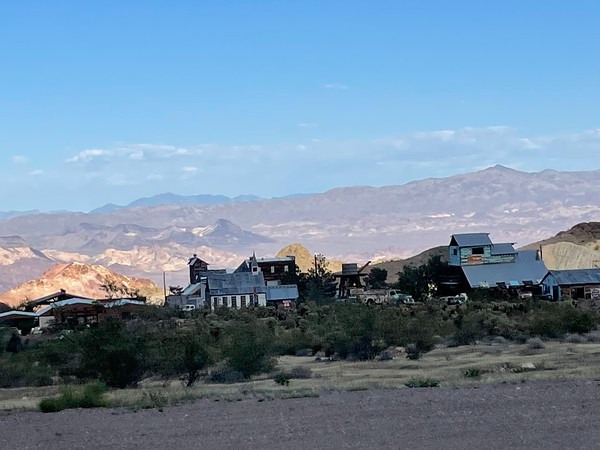
In 1994, Tony and Bobbie Werly bought roughly 50 acres of the old Techatticup site, complete with a store, stamp mill, bunkhouse, and miner cabins. Years of restoration work transformed the decaying camp into a preserved window on the Old West, and they opened the historic mine for guided tours.
What is Eldorado Canyon like today?
The canyon is a striking mix of raw desert scenery and preserved history. Towering walls, open washes, and sweeping views define the landscape, while the ghost town and mine give it a sense of place you cannot get from scenery alone. Wildlife is part of the experience too, from desert birds to the occasional bighorn sheep in the surrounding mountains, and the desert flora shifts with the seasons. It is genuinely wild country, which is exactly what makes it such a rewarding place to explore on an off-road tour.
Is Eldorado Canyon worth visiting?
Absolutely, and it is one of the most underrated day trips from Las Vegas. The canyon combines raw desert scenery, genuine frontier history, and a touch of Hollywood, since the nearby Nelson Ghost Town has served as a filming location for movies like 3000 Miles to Graceland and countless music videos.
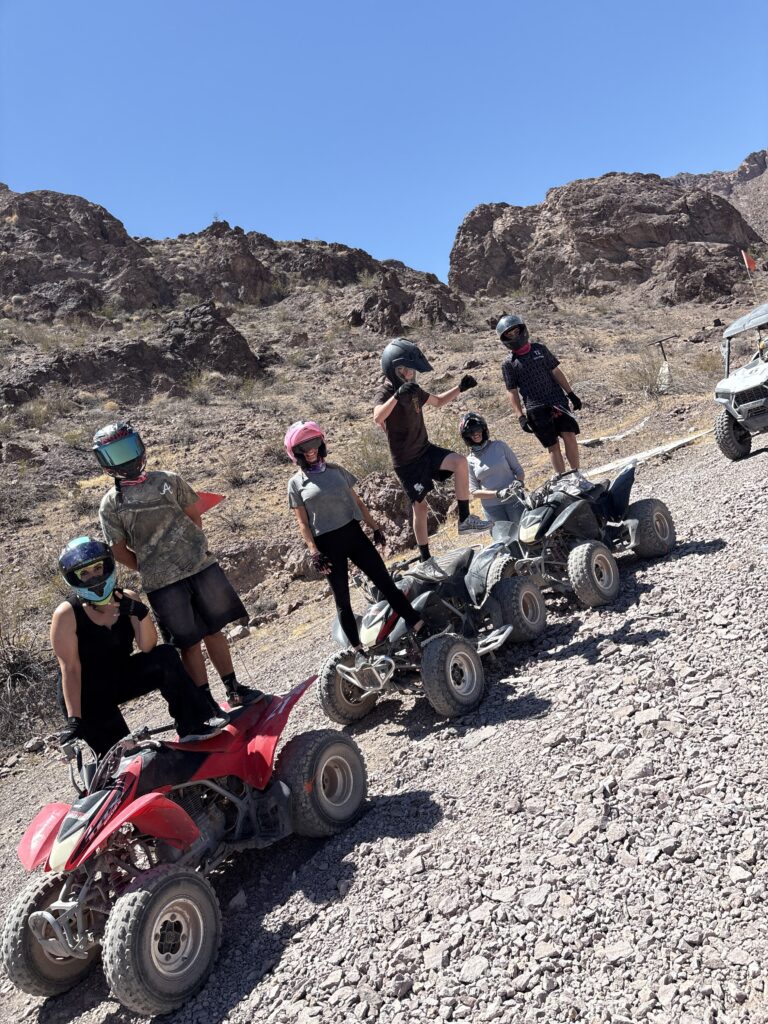
The best way to experience the canyon is on a guided off-road tour that takes you onto trails most visitors never see. Awesome Adventures runs guided ATV and RZR tours on private desert trails through the Eldorado Canyon area near Nelson, with stops at the private 1861 Ghost Town and the famous Techatticup Gold Mine property. On select tours you go inside the mine, where guides share the stories of the miners who lived and worked here, details you cannot get anywhere else. No experience is required, all gear is provided, and every guest receives a free photo and video package.
When should you visit Eldorado Canyon?
Spring and fall offer the most comfortable conditions, with mild temperatures ideal for spending a few hours outdoors. In summer, aim for a morning tour to beat the midday heat, and always bring plenty of water. Winter days are often clear and cool, which makes for excellent photography and comfortable riding. Whatever the season, wear closed shoes and long pants suited to desert terrain, since the trails feature rocks, cacti, and uneven ground.
Eldorado Canyon spent a century as one of the wildest places in the West. Now you can explore it safely, with the history as your backdrop. Browse our Eldorado Canyon tours or call 702-257-8509 to plan your ride.
#LasVegasATVTour #EldoradoCanyon #NelsonGhostTown #ThingsToDoInLasVegas #TechatticupGoldMine